2001 Program Improvements
At Power Line Systems we continually improve our software.
Below we list some of the more significant enhancements made during the year 2001.
Click here for improvements made in 2000 or here for the most recent enhancements.
- PLS-CADD version 5 released

- New and greatly improved user's manual
- On-line/electronic PDF user's manual
- Context sensitive help
- Help/Check For Updated Manual command that finds and automatically downloads and installs updated documentation.
- Undo & Redo- multiple levels (requested at every user's group)
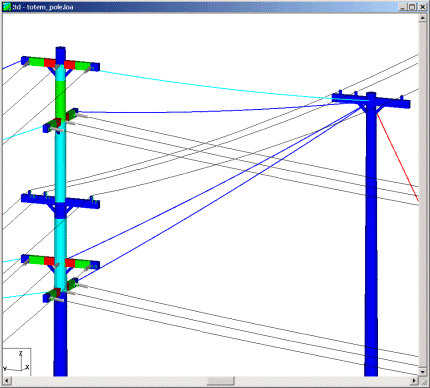
- PLS-CADD/Lite interface for taps and Joint-Use
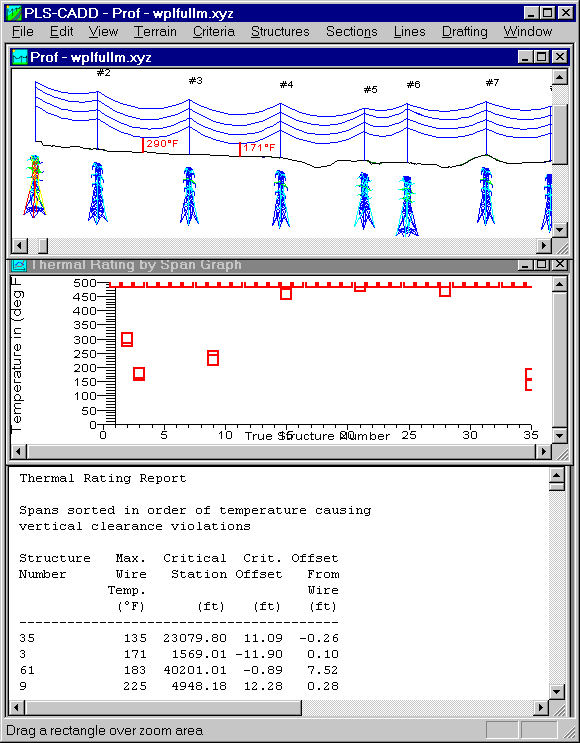
- Thermal rating improvements- graphics and reports
- Import/Export parts and assemblies to databases
- Separate load cases for tangents and dead ends (Sun Valley 2000 request)
- Load cases for broken conductor, unbalanced ice and other unbalanced loading scenarios (Sun Valley 2000 request)
- Separate load and suspension insulator swing calculations for each phase
- Improved text placement and orientation (minimizes collisions and eliminates upside-down text) (Atlanta 2000 request)
- Support attaching imagery in TIFF format including GeoTIFF extensions (requested at every user's group)
- Support attaching imagery in Enhanced Compressed Wavelet (ECW) format which is highly compressed (up to 50:1)
- Can string around angle structures
- Clearance checks for an entire line with a single command (Jackson 2000 request)
- Clearances between wires and structures (including guy wires)
- Can import staking table from a database and automatically string wire
- Added support for NESC 2002 and Russian Electric Safety Code
- Added File/Export/Web command that creates PDF (requires Adobe Acrobat Writer) representation of sheets along with HTML index page and assorted reports.
PLS-CADD/Lite
A new, streamlined version of PLS-CADD used to quickly model a few spans. Developed specifically for Joint-Use type applications, PLS-CADD/Lite is the ideal tool for quick sag-tension, clearance and loads calculations.
- Input kept to minimum needed to model span yet still flexible
- Span geometry entered using one or more of following:
- X, Y and Z coordinates of attachment points
- Span bearing, length and change in elevation
- Span bearing, wind span and weight span
- Wire tension determined from one of following inputs:
- Tension
- Catenary constant
- Mid span sag
- X, Y and Z of point on wire
- Automatic sagging criteria (% of RTS)
- Up to 60 wires fanning out in all directions
- Sag-tension calculations
- Structure loading calculations
- Clearances between wires and crossing spans
- Option to string wires to and develop loads for PLS-CADD, PLS-POLE and TOWER structures
- On-line/electronic PDF user's manual
- Context sensitive help
- Help/Check For Updated Manual command that finds and automatically downloads and installs updated documentation.
- Structure property click to edit
- Ability to display member forces in graphics views
- Project report with revision tracking capability
- Ability to compare structure models and results (Joint Use applications)
- Minimum distance between members command
- Ability to draw and measure clearances to equipment (i.e. a transformer)
- Automatically determine allowable suspension insulator swings
- On-line/electronic PDF user's manual
- Context sensitive help
- Help/Check For Updated Manual command that finds and automatically downloads and installs updated documentation.
- Structure property click to edit
- Ability to display member forces in graphics views
- Project report with revision tracking capability
- Ability to compare structure models and results
- Interface for linking to user supplied post processor
- Minimum distance between members command
- Ability to draw and measure clearances to equipment
- Automatically determine allowable suspension insulator swings
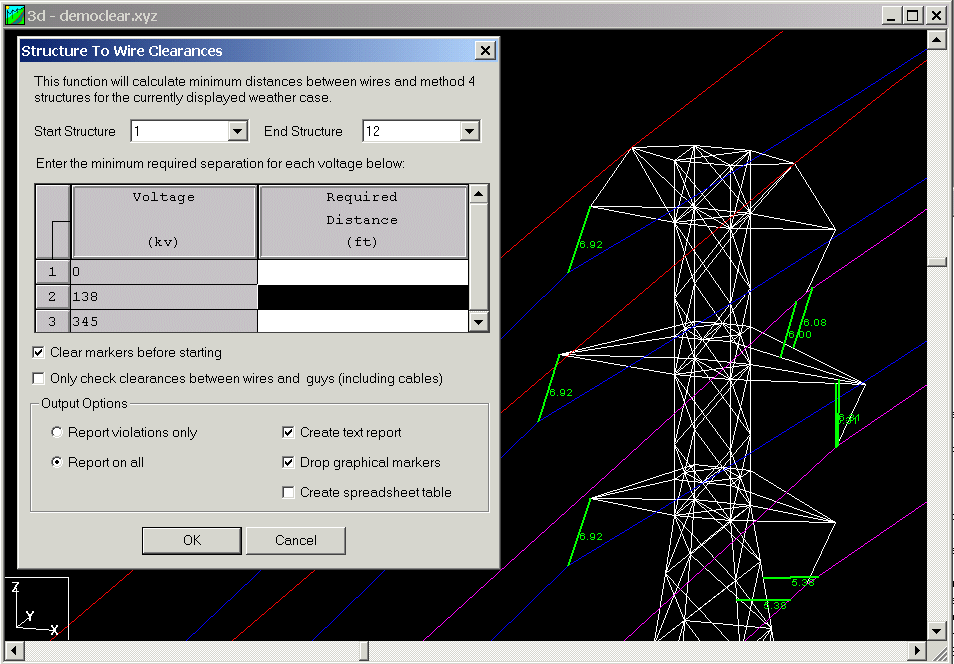
The following screen shots show the new PLS-CADD Structure Clearances feature. This function calculates the minimum distance between
all wires and all structures in your line. The output can be graphical as shown below, in a report and/or in a spreadsheet.
It takes only a few minutes to determine the clearances for a hundred mile line (the time is cut in half for dual processor machines).
Here you can see the options available with this function and the results for one lattice tower. The minimum distance between the wires on
the left and the structure lies along the insulators since the conductors are swung away from the structure. On the right of the structure
you can see that the minimum separation can be controlled by several different parts of the structure: At the top, it
is limited by the distance to the lower hanger, in the middle it is limited by the distance to it's own arm and at the bottom the limit comes from
the distance to the tapered tower body. Note that this calculation includes the effects of dip angle as shown at the bottom right conductor.

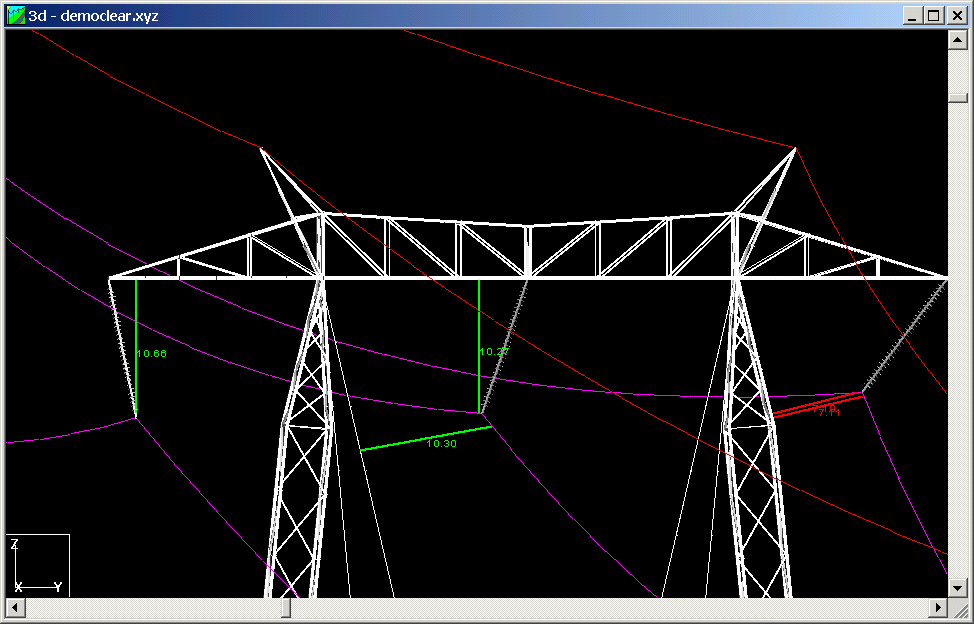
Here you can see clearances checked to a guyed portal tower. The minimum clearance for the leftmost conductor is to the
top of the arm. The middle conductor back span is closest to the bridge and the ahead span is limited by the longitudinal guy!
The right conductor is closest to the latticed mast due to the swing towards the structure and actually violates the required
clearance of 7.5ft which is why it is drawn in red.

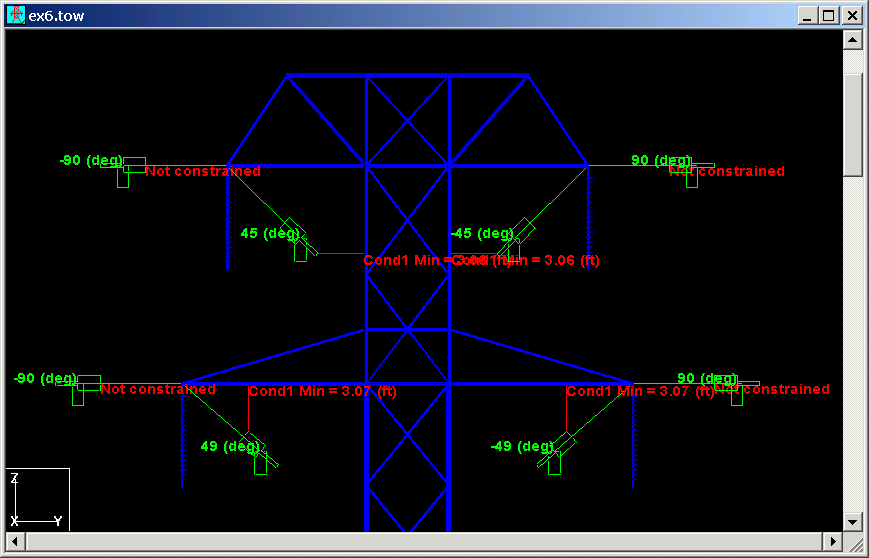
The following picture shows results from the new PLS-POLE and TOWER calculator for determining allowable suspension insulator swing angles.
© 2012 Power Line Systems, Inc. All Rights Reserved.